home > academics > science
Internships
Internships (also known as field experiences or clinical
experiences) are opportunities for students to apply the
theoretical knowledge and skill learned in the classroom to
practical, real world situations. Internships allow students to
explore potential career paths, experience the workplace context,
solve meaningful problems, build practical skills, and network
with professionals in their fields of interest. Although most
interns receive academic credit for such experiences, some (but
not all) also may receive financial compensation.
In the School of Science, internships come in many forms:
- Environmental Science & Policy majors in both tracks
are required to complete either 6 credit hours of internship, 6
credit hours of directed research, or 3 credit hours of each.
Dr. Thomas Lynch works with students to coordinate and arrange
each internship to fit the needs and interests of the student.
Some internships occur during the academic year, whereas others
occur in the summer. For additional information please visit
the
Environmental Science & Policy
homepage and/or contact Dr. Lynch (x-2443 or
Thomas.Lynch@marist.edu).
- All Medical Technology students complete a six-month
rotation which brings them to clinical laboratories at up to
six sites in close proximity to the Marist campus. These
rotations are established and scheduled by the Department Chair
and start in June following the junior year, running until the
end of the fall semester of senior year. While on clinical
rotations, student attend lectures and classes and earn
academic credit. For additional information, please visit the
Medical Laboratory Sciences
homepage and/or contact Dr. Robert Sullivan (x-2177 or
Robert.Sullivan@marist.edu).
-
Biomedical Sciences majors must complete 3 credits of internship with a health
care practitioner. Students may choose to complete all 3 credits in one semester,
or select three 1-credit internships with different supervisors. Dr. Joseph
Bettencourt, Advisor to the Health Professions, coordinates all Biomedical Sciences
internships.
- Although not required as part of the major, Biology and
Chemistry students often undertake internships with
pharmaceutical and agri-business firms, physicians,
veterinarians, dentists, in hospitals, clinics, and other
health-care settings, at ecological field stations, national
parks and forests, and governmental agencies, or even at other
colleges and universities with special summer programs. These
experiences are usually arranged by the student with the help
of their academic advisor. Pre-med and other pre-health
students should contact Dr. Joseph Bettencourt (x2243) about
health care internships. To receive academic credit,
internships must be coordinated through the Center for Career
Services.
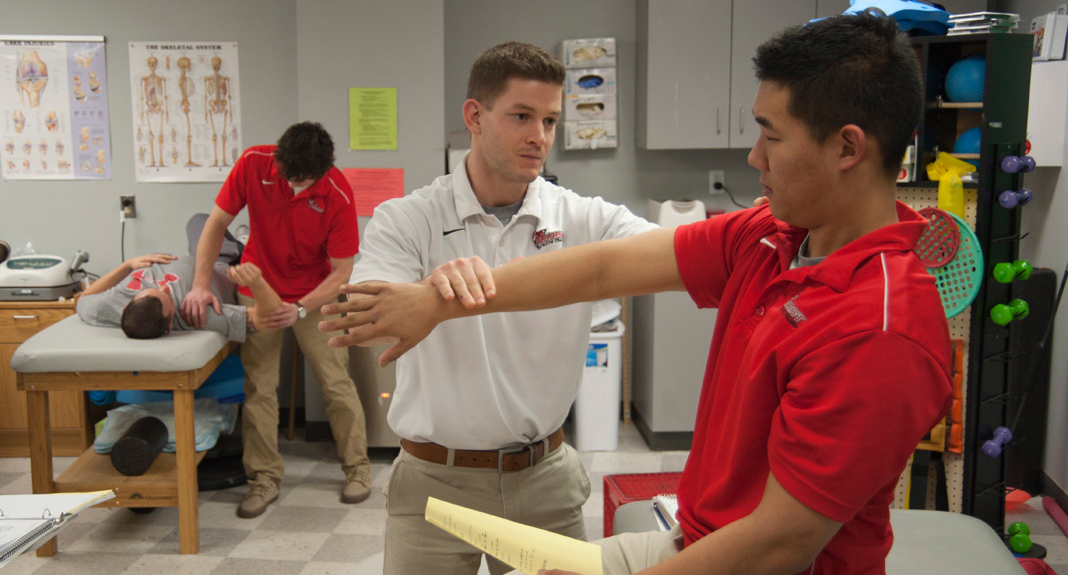
- Athletic Training majors must complete 800 hours of
supervised internships to qualify for the national
certification exam after graduation. These internships are
arranged by the Program Director and are spread over the
sophomore, junior, and senior years. For additional
information, please visit the
Athletic Training
home page and/or contact the Program Director, Sally Perkins
(x-3912 or
Sally.Perkins@Marist.edu)
A partial list of recent student internship sites
includes:
- Biosphere II in Arizona
- RPI Department of Chemistry
- Institute of Ecosystem Studies
- National Park Service
- St. Francis Hospital
- Central Hudson Gas and Electric
- Scenic Hudson
- Dutchess County (NY) Environmental Management Council
- Vassar Brothers Medical Center
- Cold Spring Harbor Laboratories
- National Institutes of Health
- San Francisco '49ers
- Rhinebeck Equine LLP
- Harvard Medical School
- Smithonian Environmental Research Center
- City of Poughkeepsie