

Marist University Receives State Grant for Hudson River Climate and Data Science Education
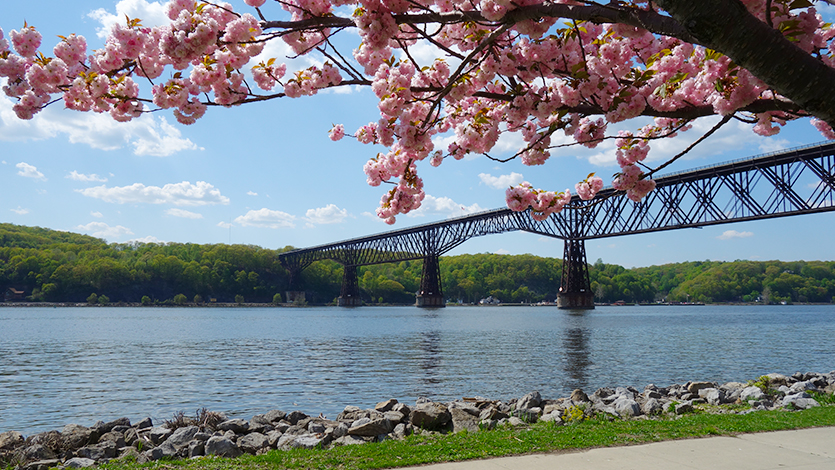
Walkway Over the Hudson in spring. Photo courtesy of Destination Dutchess.
•Marist University received nearly $100,000 in New York State grant funding to support RIPPLE Hudson, an environmental education initiative focused on the Hudson River.
•The project brings real-world climate and data science learning into elementary classrooms using Hudson River–based environmental data and research.
•Marist University students gain hands-on, interdisciplinary experience through faculty-led, grant-supported research and curriculum development.
April 21, 2026 — Marist University has been awarded nearly $100,000 in New York State grant funding to support an innovative environmental education project connecting elementary classrooms with real-world climate and data science learning focused on the Hudson River. The work will also engage Marist students in hands-on, interdisciplinary learning that bridges environmental science and classroom teaching.
The award of $99,874 was announced by the New York State Department of Environmental Conservation (DEC) as part of its Hudson River Estuary Grants Program, which supports projects that protect water resources and strengthen environmental education in river communities.
The Marist project, titled Real-world Investigations into Plants, Pollution, and Life on the Ever-Changing Hudson (RIPPLE Hudson), will partner with local non-profit organizations like the Mid-Hudson Discovery Museum, the Walkway Over the Hudson, and ConveyOR Art Gallery to engage in this work.
Led by Marist faculty researchers Dr. Laura Shelton, Assistant Professor of STEM Education, and Dr. Ramesh Laungani, Associate Professor of Environmental Science, RIPPLE Hudson will study how educators engage with scientific data related to plant life, pollution, and ecosystem change along the Hudson. The project will result in the development of two research-informed curricula designed for elementary classrooms to improve climate literacy while grounding lessons in local environmental conditions.
After Hurricane Helene devastated her hometown in North Carolina, Dr. Shelton transformed personal loss into a community-driven approach to climate education that now shapes the foundation of RIPPLE Hudson.
“Teachers and students need to have time to think about how climate change is impacting our community now, and be able to use real and local data in an authentic context,” said Dr. Shelton. “They also need time to think and imagine a more sustainable future, and elementary is the perfect space for that because young children are creative, especially empathetic, and are learning how to care for their world.”
Teaching Data Science and Climate Education
Marist education students engage young learners in hands-on science activities. Photo by Bobby Oliver/Marist University.
The curricula will support future research and broader implementation, helping educators integrate place-based environmental science while examining how teachers learn to teach data science through climate education.
“On the environmental science side, we’re working with global temperature and ocean pH data from organizations like NASA and NOAA, alongside real-world case studies that show how climate change is already affecting biological systems,” said Dr. Laungani. “What’s especially powerful is translating these changes into tangible examples—like experiments where we are finding bees developing less body fat in warmer temperatures, sharks losing their sense of smell due to ocean acidification, or shifts in animal behavior such as bears changing their food sources. These are the kinds of stories that make climate science more accessible and meaningful, particularly for younger students.”
The project brings together three preservice teachers from Marist and three in-service teachers from the Poughkeepsie City School District to explore data science through the lens of climate change and the Hudson River.
Each year, while engaging in professional development around the topics, the teacher-participants will co-develop four seasonal climate and data science focus events to take place at the Mid-Hudson Discovery Museum. The summer event will be a camp curriculum for upper elementary students during the summers of 2027, 2028, and 2029. Each camp session will conclude with a community celebration where students and teachers will share their learning with the Poughkeepsie community. In the final year, they will partner with Conveyer/or Gallery artist Surpina to create data visualizations for museum display.
The grant is part of nearly $1 million in funding awarded statewide for 14 projects in Hudson River communities. Funding for the program comes from New York State’s Environmental Protection Fund, which supports initiatives related to water quality, land conservation, climate resiliency, and environmental justice.
The Hudson River Estuary Grants Program is administered by the DEC’s Hudson River Estuary Program and aligns with priorities outlined in the Hudson River Estuary Action Agenda.
A Broader Commitment to Research and External Funding
Students and faculty walking at Longview Park on the Hudson River. Photo by Nelson Echeverria/Marist University.
The RIPPLE Hudson award is part of a broader, expanding effort across Marist to secure external funding that supports innovative teaching, research, and community engagement. From science and technology to the humanities, grants are helping faculty expand their work in ways that directly enhance the student experience and elevate the University’s impact.
Through the Sponsored Programs and Research Office (SPRO), faculty are supported at every stage of the grant process. The team works closely with faculty to identify funding opportunities, refine proposals, and navigate the increasingly complex requirements and the competitive nature of receiving external funding.
“The SPRO plays a key role in advancing academic vibrancy by supporting faculty at every stage of their work, from smaller, focused grants to larger-scale projects,” said Ariela Rosa, the office’s director. “Those early opportunities can be transformative, helping faculty build toward bigger initiatives while creating meaningful impact for students and the broader community.”
Across campus, faculty and staff continue to pursue and receive grants from public agencies, foundations, and private partners across a wide range of disciplines. These efforts expand experiential learning opportunities, support impactful scholarship, and strengthen partnerships at the regional, national, and global levels.
As the office continues to grow, it remains focused on expanding opportunities for faculty to pursue impactful work that benefits students, communities, and the world beyond Marist.


