

Video loop of Marist University science highlights.

A Bold Investment in the Future of Science and Health

A Bold Investment in the Future of Science and Health

Breadcrumb

A $100 Million Strategic Initiative Expanding Programs, Partnerships, and State-of-the-Art Facilities


What This Investment Makes Possible

Marist University announced a $100 million Science and Health Initiative — a major investment and comprehensive effort to expand opportunity, accelerate innovation, and prepare students to lead in the fast-growing fields of science and health.

Through new programs, enhanced partnerships, and a state-of-the-art facility, Marist is creating an environment where students gain both the technical expertise and real-world experience needed to succeed—and make an impact.

This initiative will:

  • Enhance and expand academic programs over time in high-demand fields including nursing and biomedical sciences
  • Create a new, state-of-the-art Science and Health facility designed for hands-on learning, research, and collaboration
  • Strengthen ties with leading healthcare organizations to provide clinical, internship, and career opportunities
  • Increase access to faculty-mentored research and experiential learning, giving students meaningful, real-world experience from their earliest semesters
  • Prepare well-rounded graduates who have impact, equipping them with the scientific knowledge, ethical grounding, and communication skills needed to lead in complex, human-centered fields


Image of an icon of advancing academic programs.

Watch the Announcement

  • See how this $100 million investment will propel Marist University forward.
Image of a building rendering of Marist's proposed Science and Allied Health expansion.

Explore the New Building

Image of Marist University student Jonathan Palmiero conducting research.

Student Outcomes

A State-of-the-Art Home for Science and Health 

A new, state-of-the-art Science and Health building will anchor Marist's investment. Labs and advanced simulation spaces—modeled after those at leading universities—will give students hands-on experience with the tools, technologies, and environments they will encounter in their careers.

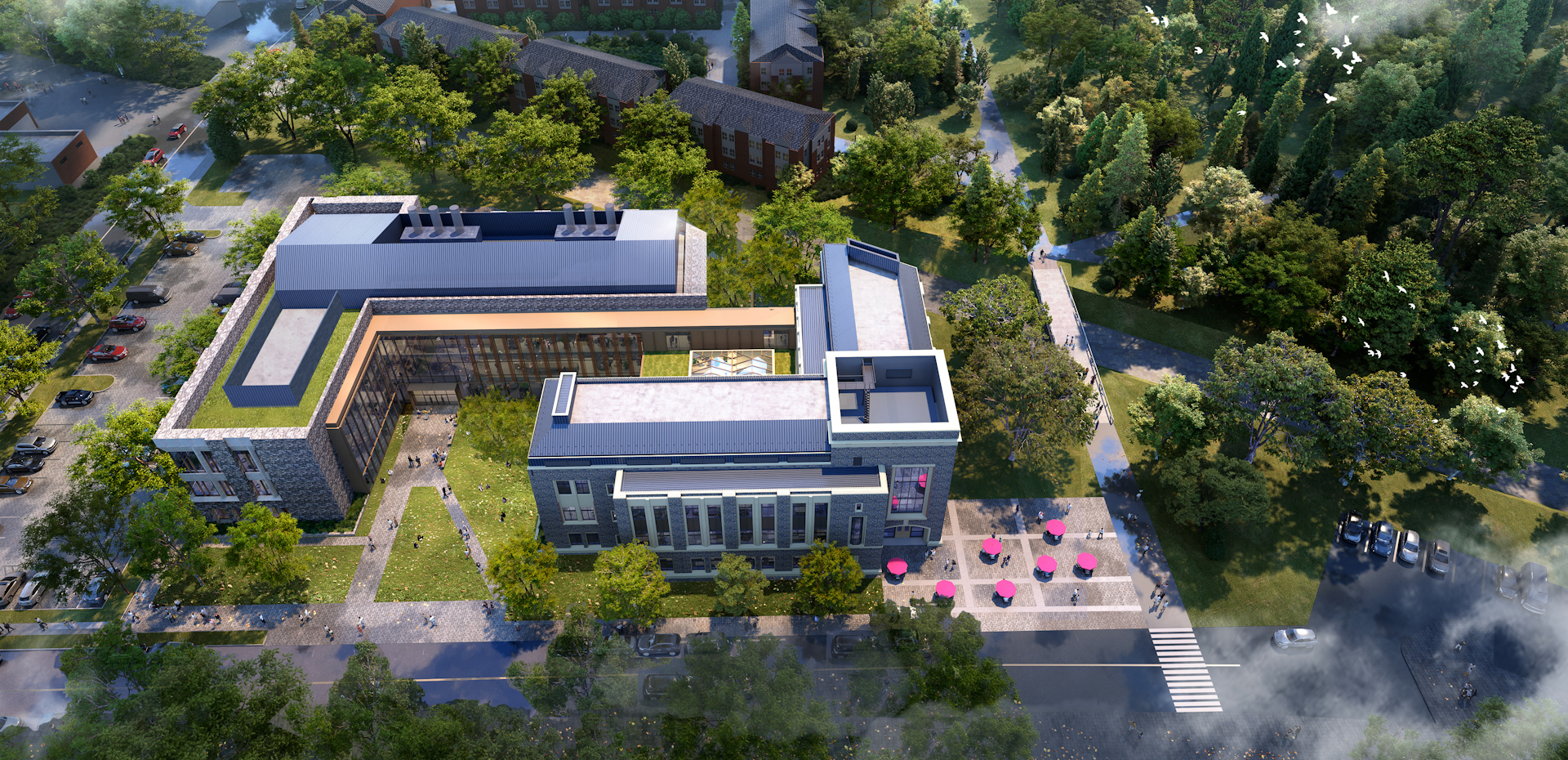
  • Early designs envision the building connecting to the existing Allied Health building, creating a fully integrated science and health complex designed to support hands-on learning, discovery, and innovation. 
  • When completed, the complex will offer more than 150,000 square feet of modern laboratories, research spaces, interdisciplinary classrooms, and collaboration areas—nearly 1.5 times the size of the Dyson Center! 
  • Award-winning design firm HGA—which has led projects at Dartmouth, Lehigh and the Broad Institute of MIT and Harvard—was hired to lead the architectural design. Marist is working with local officials on necessary approvals and, although very early in the planning phase, the building is projected to open during the 2028-29 academic year.

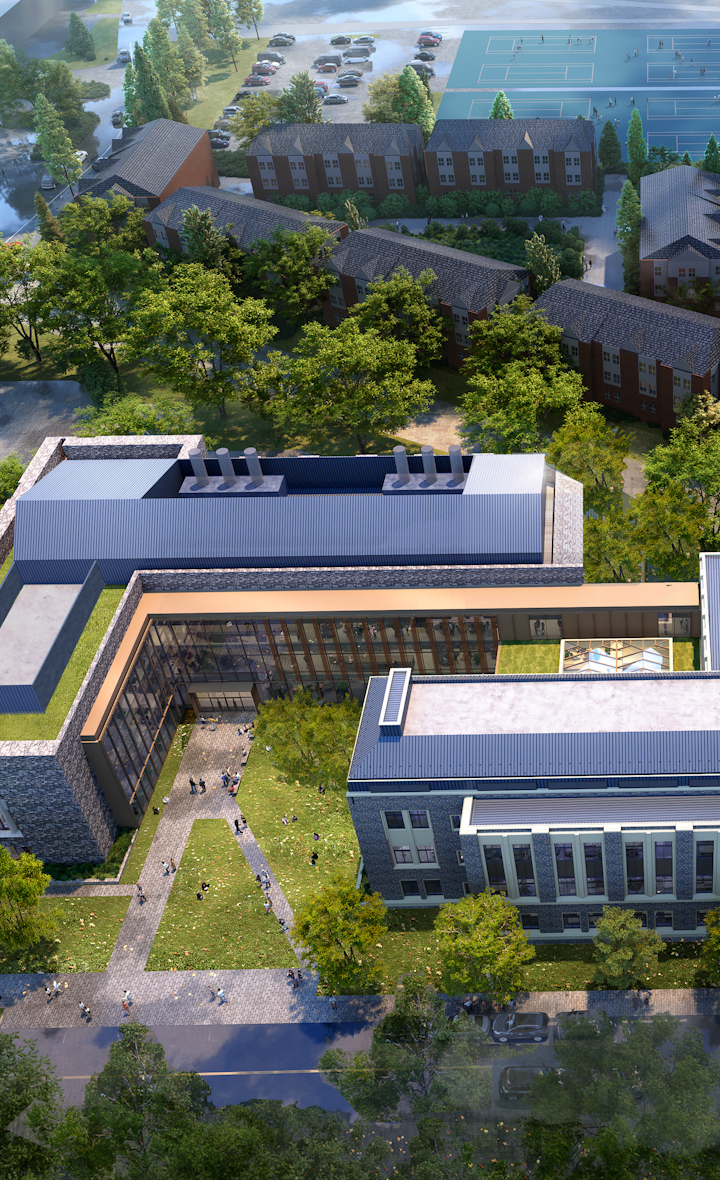
Image of a rendering of the proposed Science and Health building, connected to the existing Allied Health building at Marist University.

Aerial view of Marist’s future integrated Science and Health complex. The new 100,000-square-foot building (left) connects directly to the existing Allied Health facility (bottom right) and anchors Marist’s $100 million Science and Health Initiative.

Image of a rendering of the entrance to the proposed Science and Health building, connected to the existing Allied Health building at Marist University.

The main entrance and courtyard for the new Science and Health building, facing west towards the Hudson River, offers a welcoming front door and gathering space for the campus community.

Image of a rendering of the entrance to the proposed Science and Health building, connected to the existing Allied Health building at Marist University.

Purpose-built for research, team-based learning, and hands-on experimentation, the Science and Health building will support Marist’s full spectrum of scientific and health programs.

New Academic Programs Align with Rising Demand 

This Initiative affirms the importance of Marist's full spectrum of scientific and health disciplines—from foundational sciences to applied health fields.

  • Looking ahead, the University is taking the early steps necessary to add a new Nursing curriculum—pending state approval—as well as a Physics major coupled with partnership pathways into Engineering programs in collaboration with other top-tier universities.
  • Combined with employer demand and strong lifetime earnings, these fields position Marist as a growing national pipeline for educating future purpose-driven professionals, including environmental scientists, chemists, microbiologists, physician assistants, nurses, and physical therapists.


Image of a nurse in a clinical setting.

Nursing Curriculum

Image of a student working in a physics lab.

Physics Major

Image of a laboratory to show engineering pathways.

Engineering Pathways


Image of the CNBC logo

63% of all jobs created in January 2026 were in healthcare.

Learn More >


46%

Health professions and related programs are the second most-awarded bachelor's degrees in the U.S., with 46% growth in the last decade

Learn More >

Preparing Graduates for Top Programs and Careers

As a science student at Marist University, your postgraduate opportunities are endless. While many students gain immediate employment in their field in areas like biotechnology or pharmaceutical research, many of our graduates pursue postgraduate education to become doctors, physician assistants, physical therapists, dentists, nurses, or veterinarians. Others go on to earn doctoral or master's degrees in the biological sciences. 

  • 97% of School of Science graduates are employed or enrolled in graduate school within six months.

Here are a few examples of top-tier employers and graduate schools that welcome Marist students:

Image of collage of graduate school and employer destinations for Marist University School of Science students.Image of collage of graduate school and employer destinations for Marist University School of Science students.

Student

Image of quotation mark.

Student Quote

Faculty

Image of quotation mark.

faculty quote 

Partner

Image of quotation mark.

Partner quote - 

New Academic Programs Align with Rising Demand 

This Initiative affirms the importance of Marist's full spectrum of scientific and health disciplines—from foundational sciences to applied health fields.

  • Looking ahead, the University is taking the early steps necessary to add a new Nursing curriculum—pending state approval—as well as a Physics major coupled with partnership pathways into Engineering programs in collaboration with other top-tier universities.
  • Combined with employer demand and strong lifetime earnings, these fields position Marist as a growing national pipeline for educating future purpose-driven professionals, including environmental scientists, chemists, microbiologists, physician assistants, nurses, and physical therapists.


Image of a nurse in a clinical setting.

Nursing Curriculum

Image of a student working in a physics lab.

Physics Major

Image of a laboratory to show engineering pathways.

Engineering Pathways


Image of the CNBC logo

63% of all jobs created in January 2026 were in healthcare.

Learn More >


46%

Health professions and related programs are the second most-awarded bachelor's degrees in the U.S., with 46% growth in the last decade

Learn More >

Preparing Graduates for Top Programs and Careers

As a science student at Marist University, your postgraduate opportunities are endless. While many students gain immediate employment in their field in areas like biotechnology or pharmaceutical research, many of our graduates pursue postgraduate education to become doctors, physician assistants, physical therapists, dentists, nurses, or veterinarians. Others go on to earn doctoral or master's degrees in the biological sciences. 

  • 97% of School of Science graduates are employed or enrolled in graduate school within six months.

Here are a few examples of top-tier employers and graduate schools that welcome Marist students:

Image of collage of graduate school and employer destinations for Marist University School of Science students.Image of collage of graduate school and employer destinations for Marist University School of Science students.

Student

Image of quotation mark.

Student Quote

Faculty

Image of quotation mark.

faculty quote 

Partner

Image of quotation mark.

Partner quote - 

Immersive Clinical Education and Experiences

Marist University science students put classroom theory into practice by completing clinical experiences. Students complete clinical rotations under the supervision of assigned clinical preceptors who are licensed health care professionals. Below are some of our clinical sites. 

SOS to provide up to 12 key clinical placements.

Image containing logos for Marist University, Auburn University, and West Point.Image containing logos for University of Louisville, West Virginia, and Columbia University.

Student

Image of quotation mark.

Student Quote

Faculty

Image of quotation mark.

faculty quote 

Partner

Image of quotation mark.

Partner quote - 

Join Us in Shaping the Future of Science and Healthcare

Support the Science and Health Initiative and prepare the next generation of scientists and healthcare professionals through hands-on learning and innovative programs. It will expand opportunity and accelerate innovation in high-demand fields, and philanthropic partners play a vital role advancing this work.

Image of Marist University President Doctor Kevin C. Weinman.

From President Kevin Weinman

Image of a quotation mark.

This is a long‑term investment in Marist’s academic strength, momentum, and purpose. Science and health careers are growing—and evolving rapidly—but technical knowledge alone isn’t enough. Marist educates students by pairing scientific rigor with analytical thinking, clear communication, and leadership. That combination is what will differentiate our graduates and the next generation of scientific and healthcare professionals.


image of jackie piddock, Biology Major


Jackie is all about teamwork—on and off the court.


Inspired to shoot hoops and serve, Jackie Piddock '26, a biology major, is a point guard for the Red Foxes and recently completed Marine Corps officer training. When she's not scoring on the court, she's immersed in her psychology and human bio studies preparing for her dream job as a U.S. Navy medic. Jackie is more than a DI athlete—she's a leader on the court and in her community.


Asset Publisher

Frequently Asked Questions

The Science and Health Initiative is Marist University’s long-term investment in expanding and strengthening science and health programs. It focuses on modern academic facilities, enhanced programs, strong employer partnerships, and outstanding faculty to prepare students for high-demand careers in science and healthcare.

Student interest and workforce demand in health sciences, biological sciences, and clinical professions are growing rapidly nationwide. Marist is responding by investing in programs that align with what students want to study—and where career opportunities are strongest—while building on its existing academic strengths.

The Initiative strengthens Marist’s current science and health programs, including biology, chemistry, environmental science, medical laboratory science, physician assistant studies, and physical therapy. The University is also exploring new programs such as physics, a nursing curriculum, and dual degree pathways that allow students to move efficiently from undergraduate to graduate study.

Marist combines career-focused science and health education with a liberal arts foundation, ensuring students graduate with both technical skills and the broader abilities employers and graduate programs value. Small class sizes, faculty mentorship, and experiential learning are central to the Marist experience.

Yes. Planning is underway for a new, state-of-the-art Science and Health building that will include advanced labs, research spaces, interdisciplinary classrooms, and areas for collaboration. The facility will anchor a fully integrated science and health complex on Marist's East Campus.

Marist aligns its programs with high-growth, resilient careers in science and healthcare. Students gain real-world experience through clinical placements, research opportunities, and partnerships with leading health systems—helping them stand out in the job market and competitive graduate admissions.

Yes. Marist offers a strong foundation for pre-med, pre-health, and allied health pathways, with coursework in the sciences, faculty advising, experiential learning, and access to clinical environments that support students pursuing medical, dental, PA, PT, and other health professions.

Marist science and health students are well prepared for competitive graduate and professional programs through rigorous academics, research exposure, close faculty mentoring, and skill development in critical thinking and communication. In the past, Marist students have earned:

  • Barry M. Goldwater Scholarships
  • National Science Foundation Graduate Research Fellowships
  • National Science Foundation Research Experiences for Undergraduates (REU)

Marist offers graduate programs in physician assistant and physical therapy.

Donors can play a leading role in advancing the Science and Health Initiative through the University's capital campaign. Leadership gifts support the creation of a state-of-the-art academic home for science and health, with opportunities to name key spaces. Each investment directly expands opportunity for students and strengthens Marist's future.

Contact:

Kirk Swenson
Vice President, Advancement
(845) 575-3264
maristadvancement@marist.edu