Join us for a Fall Open House and see Marist for yourself. Explore our stunning riverfront campus, learn more about academics and admissions, and get a firsthand look at life as a Red Fox. Along the way, you'll hear from students, faculty, and staff about the opportunities, connections, and experiences that make Marist special. Register Below:
Join us for a Fall Open House and see Marist for yourself. Explore our stunning riverfront campus, learn more about academics and admissions, and get a firsthand look at life as a Red Fox. Along the way, you'll hear from students, faculty, and staff about the opportunities, connections, and experiences that make Marist special. Register Below:
Join us for a Fall Open House and see Marist for yourself. Explore our stunning riverfront campus, learn more about academics and admissions, and get a firsthand look at life as a Red Fox. Along the way, you'll hear from students, faculty, and staff about the opportunities, connections, and experiences that make Marist special. Register Below:
Join us for a Fall Open House and see Marist for yourself. Explore our stunning riverfront campus, learn more about academics and admissions, and get a firsthand look at life as a Red Fox. Along the way, you'll hear from students, faculty, and staff about the opportunities, connections, and experiences that make Marist special. Register Below:
June 9, 2026 — As the FIFA World Cup kicks off across North America later this week, a Marist professor, author, and nationally recognized soccer journalist will be in the middle of it—covering his fourth tournament on the sport’s biggest stage.
Professor Schaerlaeckens in Qatar at the 2022 FIFA World Cup.
Photo courtesy of Leander Schaerlaeckens.
⚽ World Cup Insider: What Professor and Veteran Journalist Leander Schaerlaeckens Sees That Fans Miss
1. Marist professor goes where fans can’t: Think player tunnels, press rooms, and the moments right before and after history happens.
2. The scale is almost impossible to grasp: Tens of thousands of people gather day after day for weeks—it’s not one event, it’s a rolling global spectacle.
3. Every match carries a lifetime of pressure: Players spend their entire lives reaching this stage, where everything unfolds over the span of just a few weeks.
4. This U.S. team might be the best ever: It’s deeper, more talented, and more accomplished than any U.S. men’s national team that came before it.
5. The experience comes back to the classroom: What happens on the world stage doesn’t stay there—it directly shapes what students learn firsthand in the fall.
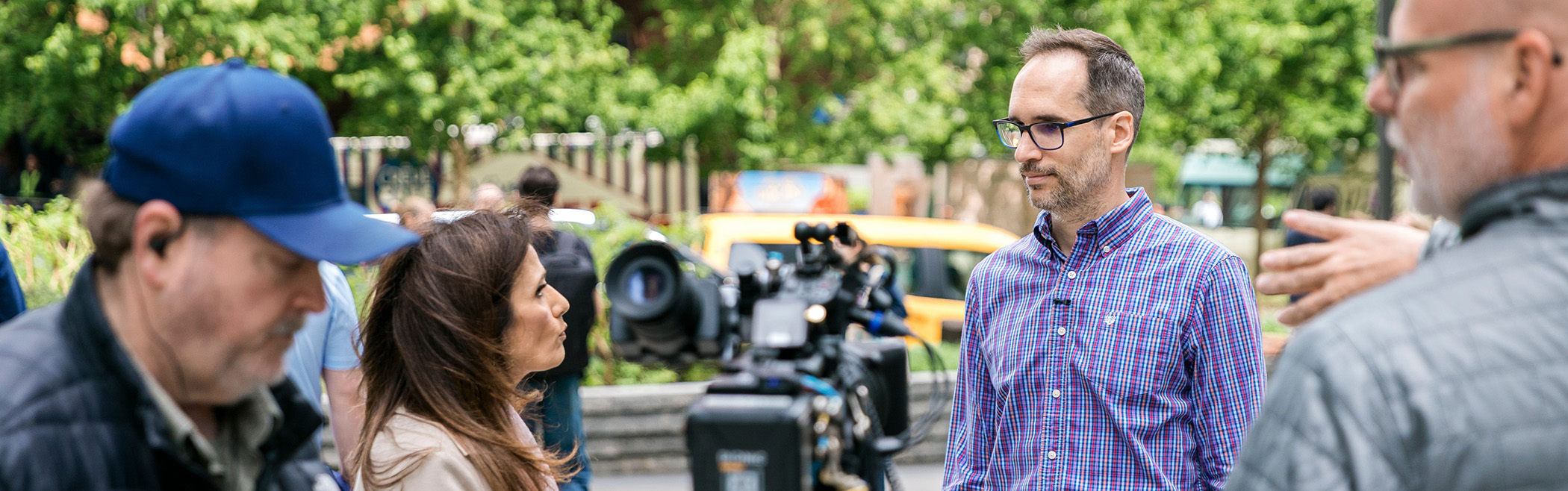
From player tunnels to press rooms, Schaerlaeckens will report on the moments most fans never see. “The raw emotion of the tournament is always sort of moving to me,” he said.
That proximity offers a perspective few can match—and one he will translate in real time for campus audiences. “I’m always taken aback by the enormity of it,” he said. “Tens of thousands of people gather. There’s a remarkable energy to the thing that I can’t possibly describe. And you get to sit right in the middle of that.”
Throughout the tournament, we will follow Schaerlaeckens’ journey across host cities on social media with updates, behind-the-scenes snapshots, and on-the-ground insights, offering a firsthand look at the atmosphere, storylines, and defining moments as they unfold.
This year’s World Cup also places a spotlight on the U.S. men’s national team, which Schaerlaeckens sees as uniquely positioned. “This team is deeper, more talented and more pedigreed than any incarnation of the U.S. men's national team before it,” he said.
“Imagine spending your entire life trying to get to this place, and then all of it unspools in the course of no more than a month.”
- Professor Leander Schaerlaeckens
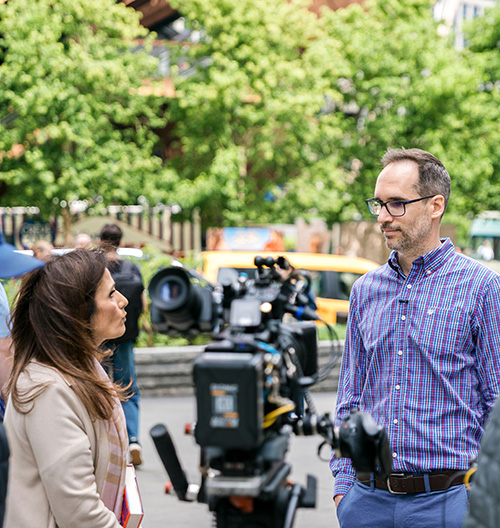
Watch and Listen to Professor Schaerlaeckens' World Cup Media Appearances
CNN Interview
PBS NewsHour
Total Soccer Show Podcast
That perspective is also at the heart of his book, The Long Game: U.S. Men’s Soccer and Its Savage, Four-Decade Journey to the Top, or Thereabouts, which chronicles the turbulent, often improbable rise of men’s soccer in the United States. Drawing on decades of reporting and insider access, the book traces the sport’s evolution from obscurity to global relevance, examining the personalities, setbacks, and turning points that shaped the program—context that makes the 2026 World Cup and the current U.S. squad especially significant.
The experience comes back to the classroom. Schaerlaeckens has already integrated World Cup content into his teaching and will carry those insights into the fall semester. “It will inform everything I teach anew, transmitting my experiences out in the field to the classroom,” he said.
The University again earned recognition for its academic and career programs as well as campus life, landing on the Best 392 Colleges list alongside "Colleges that Create Futures" and Northeast regional rankings.




![[[alt text placeholder]]](/documents/86200/16102275/Leander+Podcast+5+placeholder.jpeg/c623e3f1-ef6d-5fb6-6dff-160a7ba354a9?t=1780414195055)


