

Office Hours with Dr. Marilyn Lashlee
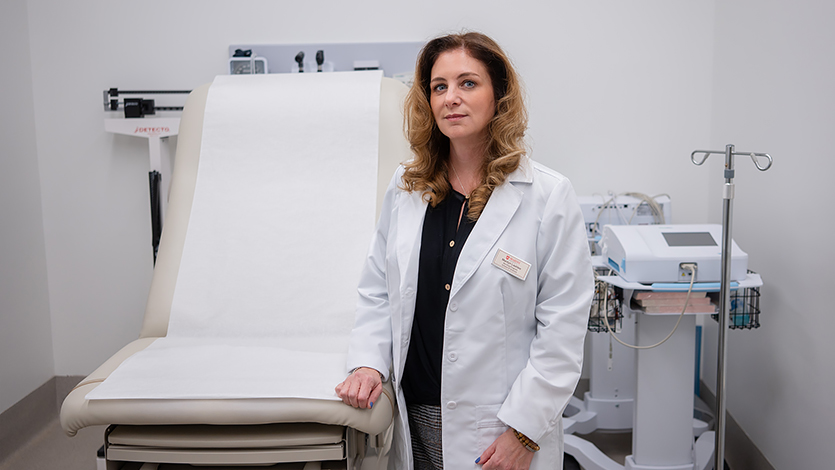
November 17, 2026 — This summer Marist welcomed Dr. Marilyn Lashlee, new Founding Program Director of Nursing in the School of Science.
Dr. Lashlee brings more than 26 years of experience in nursing and nursing education, including over 16 years in academia. Most recently, she served as an Associate Professor of Nursing and Graduate Nursing School Coordinator, overseeing Family Nurse Practitioner, Psychiatric Mental Health Nurse Practitioner, and Adult-Gerontology Nurse Practitioner programs, as well as a Master's track in Nursing Education.
A board-certified Pediatric and Psychiatric Mental Health Nurse Practitioner, Dr. Lashlee holds a Doctor of Nursing Practice from Northeastern University, a Master of Science in Nursing from Lehman College, and a Bachelor of Science in Nursing from Mount Saint Mary College. Her research focuses on mentorship and retention among first-year nursing students, adolescent mental health, and pediatric oncology. She was also named a Hudson Valley Excellence in Nursing Top Nurse in 2009.

To introduce Dr. Lashlee to the campus community, Inside Marist’s Michelle Eggink sat down with her for Office Hours, a recurring segment that sparks conversations with members of the campus community.
Q: How has your educational and professional background led you to where you are now as Marist's new Founding Program Director of Nursing? What makes you excited to be at Marist?
A: This path has really been shaped by my last 26 years in nursing and nursing education. Marist has given me a rare opportunity to build a program from the ground up and knowing that we have such a strong foundation here, it gives us the ability to make the right decisions not only for future nursing students, but also for the communities that they will eventually serve.
Dr. Marilyn Lashlee, Founding Program Director of Nursing in the School of Science. Photo by Nelson Echeverria/Marist University.
Q: What's the most rewarding part of being in the nursing field?
A: Mentoring is very important in nursing education. It puts a support system in place for students who come from different backgrounds; not every high school education is the same, and your early-on classes are not necessarily connected to your future profession. It's important for students to feel connected from the very beginning.
Q: What advice do you have for students who are thinking about entering the medical field?
A: Look for small opportunities to spend time with patients. Sharing that space with someone is something you have to experience to understand, and those moments will help you find your own path. Science often feels black-and-white, but real-world interactions teach you to be comfortable with uncertainty. You won't always know the answer right away, and that's okay. What matters is that you stay adaptable and resourceful as you work toward the right solution.
Q: What do you do for fun outside of work?
A: My daughters are competitive dancers, so a lot of my free time goes into traveling with them, designing their costumes, and watching them perform. I also very much enjoy writing, reading, and expressing my creativity through personal projects. To be in the nursing field also requires a lot of creativity, critical thinking, and problem-solving, so I like to cultivate that outside of work too.
Q: How can nurses play a role in identifying and supporting young people experiencing mental health concerns?
A: You have to ask the hard questions, and then you have to be prepared for the answer. That starts with building a real connection with your patients, learning to ask open-ended questions comfortably, and truly listening to what they tell you. Practicing in a safe space, like role-playing simulations, can help you feel ready for what you might hear as a provider.
Q: If you could have dinner with anyone in the world of science, dead or alive, who would it be?
A: I think it would be fascinating to have dinner with Florence Nightingale. During the Crimean War, she showed that more soldiers were dying from preventable infections in hospitals than from their battle wounds, and she pushed for the change that saved lives. As a woman and a nurse in that time, it's amazing what she was able to accomplish. I'd love for her to see what we're doing in nursing now with evidence-based practice, because she was practicing it before it had a name.
Q: What impact do you hope your work will have on the future of nursing education and patient care?
A: Healthcare is changing so rapidly that my goal is to help move us in step with those changes. Everybody's journey in healthcare is different, and I want to show that being challenged is sometimes the best thing you can do for yourself. I would never have gotten into education if I hadn't put myself in uncomfortable or unfamiliar situations. You just need the courage to grow, because in nursing, you can reinvent yourself a hundred times.


