

Marist Launches Swipe Out Hunger Program to Support Students Facing Food Insecurity
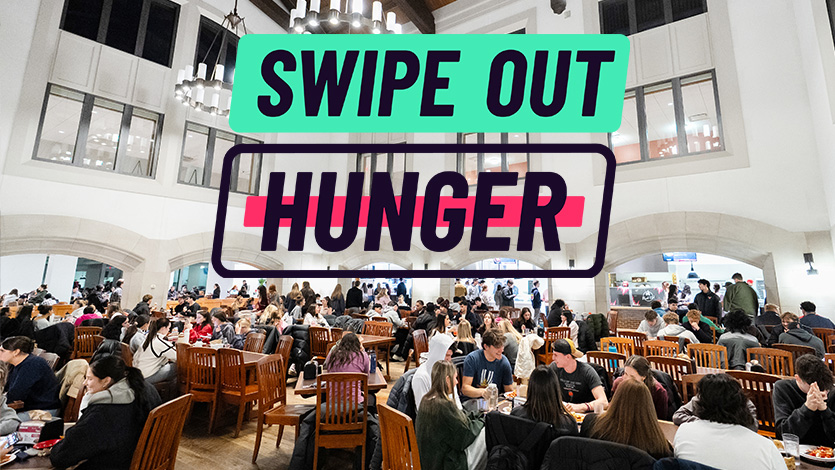
Marist University Dining Hall. Photo by Carlo de Jesus/Marist University.
February 24, 2026 — Did you know that one in three college students nationwide face food insecurity? In response, Marist University has launched Swipe Out Hunger — a program designed to provide meal swipes to students who need support.
Swipe Out Hunger offers a discreet and supportive way for students to access meals during times when affording food becomes challenging. The program is open to any Marist student who may be experiencing gaps in reliable access to meals.
"Food insecurity can make it difficult for students to focus on their academics and extracurricular activities, which is one of the many reasons why combating food insecurity is crucial for student success," said Angelica Hibbert '25, Marist Food Insecurity Committee member. "Swipe Out Hunger reminds students they are not alone and are seen, heard, and supported."
Marist’s program was developed using best practices from Swipe Out Hunger, a national nonprofit that partners with colleges and universities to help address hunger among students. The organization works with hundreds of campuses across the country to create effective, student-centered food access programs.
How the Program Works
Fresh salads and nutritious meal options are prepared daily by Marist Dining Services. Photo by Carlo de Jesus/Marist University.
Students can request meal swipes by completing this form. Once approved, meal swipes are added directly to the student’s Marist ID card and can be used at the Dining Hall in the Murray Student Center. When redeemed, they appear as regular meal swipes at the register, protecting students’ privacy.
How To Donate
Students who would like to support their peers can donate up to three meal swipes per semester or the equivalent value in Den Dollars. Any Marist community member with a meal plan, including Marist employees enrolled in a faculty or staff meal plan, can also donate through the Grubhub app. A step-by-step guide on how to donate meal swipes or Den Dollars is available here.
In addition to student donations, Gourmet Dining generously provides the initial bank of swipes each semester to jump-start and help sustain the program.
“No Red Fox should ever go hungry,” said Gourmet’s Beth Cookinham '99/M'03, Marist Food Insecurity Committee member. “As an alumna, it means so much to support this initiative and help ensure every member of our campus community has access to nourishing, high-quality food.”
Students with additional questions about Swipe Out Hunger can contact Jeffrey Hershberger, Assistant Vice President of Operations, at Jeffrey.Hershberger@marist.edu.
Gourmet Dining staff meal prepping. Photo by Nelson Echeverria/Marist University.
“Food insecurity is a reality more common than many may realize, and it can quietly shape a student’s ability to learn and live fully,” said Dr. Edward Antonio, Vice President of Community and Belonging. “When students have reliable access to food, they are better able to focus on their academics and participate in the life of the University. Through the work of our Food Insecurity Committee and programs like Swipe Out Hunger, we are reaffirming our responsibility to care for one another and to uphold the dignity of every member of our community.”


